
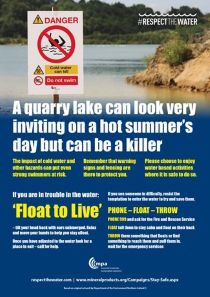
The tragic deaths by drowning of 15 teenagers at inland water sites during the recent hot weather highlights the vital importance keeping our quarries safe. According to the MPA, around 60% of accidental drownings in the UK occur at inland water sites such as rivers, reservoirs, canals and lakes, including those in quarries.
Longer daylight hours, school holidays and higher temperatures historically lead to greater public activity around our site boundaries, particularly at locations close to residential areas, recreational spaces and known access points.
While trespass presents many risks, one of the most serious concerns during warmer months is the increased likelihood of people, particularly children and teenagers, attempting to access quarry water for swimming.
This makes maintaining secure boundaries more important than ever.
Why Site Security Matters
Quarries and operational sites contain significant hazards that may not be obvious to members of the public. Open water, excavations, mobile plant, steep faces, stored materials, confined spaces and working equipment all present potentially life-threatening risks.
Open water is particularly dangerous because it often appears safe when it is not. Recent tragic events serve as a stark reminder of these risks. Quarry lakes, whether active, dormant or restored, can create a false impression that they are safe places to swim when in reality they contain hidden hazards that can prove fatal.
A well-maintained boundary does more than protect our assets – it helps protect lives.
Securing Our Sites – Key Actions for Site Managers
- Site Managers should proactively review site security arrangements and ensure controls remain effective throughout the higher-risk summer period.
Secure Boundaries and Known Entry Points
- Inspect site perimeters regularly, focusing on previous or potential access routes.
- Ensure fencing, gates, bunds and barriers remain secure and fit for purpose.
- Repair damaged sections promptly before weaknesses become established access points.
Improve Signage and Visibility
- Ensure warning signage remains visible, maintained and positioned appropriately.
- Use clear messages around danger, restricted access, CCTV and water hazards.
- Position signs at regular intervals and at known access routes.
Manage Vegetation Effectively
- Use natural vegetation where appropriate to discourage access and strengthen boundaries.
- Balance deterrence with maintaining visibility for operational safety and monitoring.
Maintain Regular Boundary Inspections
- Continue routine perimeter inspections and document emerging risks or vulnerabilities.
- Record findings and ensure corrective actions are completed promptly.
Review Risk Assessments and Controls
- Ensure public safety risk assessments reflect increased seasonal trespass risks.
- Confirm controls adequately address water hazards, excavations, heights, mobile plant and confined spaces.
Check Safety Equipment and Emergency Preparedness
- Ensure lifesaving equipment such as throw lines and life buoys are present, accessible and maintained.
- Consider additional temporary controls or security measures where concerns exist.
Maintain Security Across All Sites
- Apply the same standards of security and inspection to active, dormant and vacant sites.
- Review equipment, fuel and asset security as part of overall site protection measures.
Helping Prevent Tragedies Through Awareness
- Physical barriers alone are not enough. Sharing safety messages with local communities, schools, families and colleagues can help prevent incidents before they happen.
The MPA has resources including posters, sharing their Stay Safe campaign, which can be found HERE.
A Shared Responsibility
Secure boundaries send a clear message that access is controlled and hazards are real. By maintaining robust site security, proactively managing risks and continuing to reinforce public safety messages, we can reduce trespass, protect communities and help prevent avoidable tragedies. Thank you for your continued commitment to keeping our sites safe, secure and well managed throughout the year.
Please contact John Sweeting, UK Security Manager for support with securing your sites.