
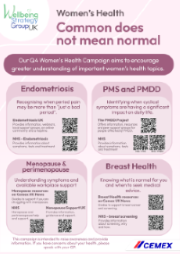
As part of our Q4 Women’s Health Awareness Campaign, we’re shining a spotlight on conditions that affect millions of women but are still too often misunderstood, normalised or dismissed.
The campaign’s message is simple: common does not mean normal. Pain, heavy bleeding, exhaustion, brain fog and severe mood changes may be common experiences, but symptoms that repeatedly affect sleep, work, relationships or everyday life deserve attention and support.
When period symptoms affect your life
Many women are told that painful periods are simply something to be endured. However, conditions such as endometriosis can cause severe period pain, heavy bleeding, pelvic or back pain, fatigue and difficulties carrying out everyday activities. Some women find themselves missing work, cancelling plans or struggling to concentrate because of their symptoms.
Similarly, while many people experience some symptoms before their period, PMS and PMDD can have a much greater impact. PMDD (Premenstrual Dysphoric Disorder) is a severe condition that can significantly affect emotional wellbeing, relationships and daily life. Symptoms can include anxiety, depression, anger, overwhelm, severe fatigue and difficulty concentrating, often following a clear monthly pattern.
You deserve to be heard
One of the strongest themes running throughout this campaign is the importance of recognising your symptoms and seeking support when something doesn’t feel right.
Symptoms should not be dismissed as “just a bad period”, “being hormonal” or something you simply need to put up with. Tracking symptoms, recording their impact on work and home life, and discussing them with a healthcare professional can help ensure you receive the support you need. The campaign encourages women to continue seeking help if symptoms persist, worsen or treatment is not working.
Support at work
Health conditions linked to the menstrual cycle can affect colleagues in different ways and at different times. A supportive workplace can make a meaningful difference. Where symptoms are affecting a colleague at work, appropriate support will be considered on an individual basis, taking account of their personal circumstances. This may include reasonable adjustments to working arrangements where appropriate. Colleagues are encouraged to discuss any workplace impact with their manager without feeling they need to disclose unnecessary personal information.
Where to find support
If you think you may be experiencing symptoms of endometriosis, PMS or PMDD, trusted information and support are available through:
- Endometriosis UK, which provides information, webinars, local support groups, an online community and a helpline.
- The PMDD Project, which offers information, resources and peer support groups for people affected by PMDD.
- The NHS website for information about symptoms, diagnosis and treatment options.
Please share our Women’s Health poster on the UK News download page: HERE on all workplace notice boards, toilet cubical doors and wellbeing notice boards.
The most important message: pain, heavy bleeding, severe fatigue and significant mood changes are not a sign of weakness or something you simply have to tolerate. Notice the pattern, record the impact, ask for help and follow up if symptoms continue.