
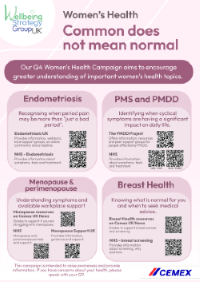
This quarter the UK Wellbeing Strategy Group is launching a Women’s Health Awareness Campaign to encourage greater understanding of important women’s health topics: endometriosis, menopause and perimenopause, PMS/PMDD, and breast health. The campaign is built around one simple message:
Common does not mean normal.
Many women experience symptoms such as pain, heavy bleeding, fatigue, brain fog, sleep disruption, anxiety or significant mood changes. While these symptoms may be common, they should not be dismissed if they are affecting day-to-day life, relationships or work.
Research carried out during the development of the UK Government’s Women’s Health Strategy for England found that many women felt they were not listened to by healthcare professionals, with concerns being dismissed or not taken seriously. The strategy highlighted widespread concerns about difficulties accessing care, obtaining diagnoses and receiving appropriate support for women’s health conditions.
That’s why an important theme running throughout our campaign is self-advocacy.
If you are experiencing symptoms that are affecting your wellbeing, don’t suffer in silence. Keep a record of your symptoms, note the impact on your daily life, and be prepared to explain how they are affecting you at home and at work. Asking questions, seeking clarification and following up when symptoms persist are all important parts of managing your health.
Over the coming weeks, we’ll be sharing information and support around:
- Endometriosis – recognising when period pain may be more than “just a bad period”.
- Menopause and perimenopause – understanding symptoms and available workplace support.
- PMS and PMDD – identifying when cyclical symptoms are having a significant impact on daily life.
- Breast health – knowing what is normal for you and when to seek medical advice.
Please share the poster on the UK News download page: here on all workplace notice boards, toilet cubical doors and wellbeing notice boards.
We’ll also signpost colleagues to trusted sources of information, support networks and resources that can help women feel informed, supported and empowered to seek help when they need it.
The key message is simple:
You know your body better than anyone else. If something doesn’t feel right, trust your instincts, seek support and keep asking questions. You deserve to be heard.