
For our second quarter, the UK Wellbeing Strategy Group has launched our new Wellbeing Campaign focused on two important themes: Mental Health and Neurodiversity. Throughout May and June we’ll be sharing practical resources, advice and helpful guidance designed to support our colleagues in understanding these topics and creating a more inclusive workplace for everyone.
Read on to find out:
Ø More about Neurodiversity.
Ø What simple but affective changes we can make in our workplaces.
Ø What sensory overload can feel like for some Neurodivergent people.
Ø How to change the background colour of your powerpoint slides (reduce the stark white).
Ø What further online support is available.
What is Neurodiversity?
Neurodiversity is an umbrella term that describes the variety of ways people think, learn, feel, and process information. It refers to the natural variation in human brain function and behaviour and encompasses a range of neurological differences, including autism, ADHD, Dyslexia and Dyscalculia, Dyspraxia, Dysgraphia and Tourette’s Syndrome and more. According to NHS England, an estimated one in seven people are neurodivergent, although with an increase in awareness and late diagnosis this in likely to be higher.
Embracing Neurodiversity in the workplace
Creating a neurodiversity-friendly workplace involves making small adjustments to accommodate different needs. By fostering an inclusive environment, we can help all employees thrive and contribute their best work. A key area we’ll be exploring is sensory stress in the workplace, something that can impact many people, particularly those who are neurodivergent. Busy offices and sites, constant notifications, background noise, bright lighting and fast-paced environments can all contribute to sensory overload, affecting concentration, wellbeing and productivity. By raising awareness of these challenges, we can help create spaces and ways of working that better support individual needs.
We strongly recommend you watch this powerful short video, demonstrating what sensory overload can feel like and how often our sensory experiences intertwine in everyday life.
Click HERE to watch this two minute video.
What Neurodiversity can look like in the workplace
Neurodivergent colleagues may:
- Struggle with organisation, memory, focus or emotional regulation.
- Find noise, lighting, interruptions or constant change overwhelming.
- Need clear instructions or more time to process information.
- Experience anxiety, stress or burnout when environments don’t suit how their brain works.
How to support our neurodiverse colleagues
In our workplaces, both in our office environments and on our operational sites, we can make small, reasonable adjustments to support our neurodiverse colleagues.
· Avoid assuming everyone works best the same way. Ask “What helps you do your best work?”
· Avoid treating anxiety, overload or shutdown as poor behaviour.
· Avoid Making sudden changes without explanation.
· Reduce sensory stress: Noise, lighting, interruptions, seating – (see more practical ways to reduce sensory stress below).
· Focus on strengths: Build roles and tasks around what people do well.
· Normalise adjustments: These are about performance, safety and wellbeing, not special treatment.
Practical ways to reduce Sensory Stress at work
What can cause stress in an office environment and what reasonable actions we can do to support this
· Open plan offices >> Allow noise-cancelling headphones where possible.
· Background conversations >> Encourage colleagues to use meeting rooms and pods for their phone and teams calls.
· Harsh or flickering lighting >> Adjust screen brightness, contrast or colour settings. Check to see if meeting room lighting can be turned off or dimmed.
· Bright screens or white backgrounds >> Amend PowerPoint slide settings to reduce bright backgrounds – see guide below.
· Sitting still for long periods >> Take short movement or stretch breaks. Normalise stepping away to regulate.
In operational environment reasonable actions may include:
· Use plain language in safety briefings.
· Allow extra processing time during training – some colleagues may need more time to absorb new systems, machinery processes, or compliance requirements.
· Reinforce verbal instructions with visual aids or written follow-ups.
· Avoiding overloading people with too much information at once.
Adjusting brightness of PowerPoint slide backgrounds
 Did you know that adjusting the brightness of PowerPoint slide backgrounds can help for a few practical reasons:
· Supports neuroinclusive design: Bright or overly stimulating slides can contribute to fatigue in long presentations. Softer backgrounds can make training sessions, workshops, and meetings easier to engage with.
· Improves text readability: If a background image is too bright, text can get lost. Dimming or softening the background increases contrast so key messages stand out.
· Reduces visual overwhelm: Very bright colours, busy images, or harsh contrast can be distracting or uncomfortable for some people, including colleagues with Autism spectrum disorder, Migraine sensitivities, or visual processing difficulties.
Adjusting PowerPoint backgrounds from bright white to a softer colour like light grey or pastel is a highly effective way to improve readability for neurodiverse audiences, particularly those with dyslexia, by reducing visual stress and glare. We have put together a simple guide with simple steps to adjusting the background colour of a PowerPoint slide, from bright white to light grey.
Click HERE to download the guide.
Further online information and support for Neurodiversity
Below, you can find links to many online resources for those looking for further support on Neurodiversity topics.
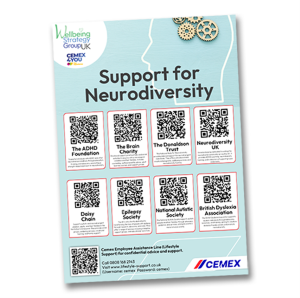
You can find QR codes to all of these support organisations on the poster on UK News download page HERE
There are numerous resources and organisations in the UK dedicated to this cause:
· Neurodiversity UK: A social enterprise dedicated to uniting the neurodiverse community across the UK. It provides ADHD coaching, neurodiversity training, and a directory of support groups and events.
· Epilepsy Society: The UK’s only charity dedicated to transforming the lives of people with epilepsy through research, advocacy, and care. They offer a range of services including a helpline, support groups, and educational resources.
· The Brain Charity: Offers emotional support, practical help, and social activities to anyone with a neurological condition and their families. They include counselling, welfare benefits advice, adult learning courses, and support groups.
· The Donaldson Trust: The National Body for Neurodiversity, providing tailored support for neurodivergent individuals. They offer educational and vocational programs, wellbeing services, and neurodiversity training.
· Daisy Chain: Supports autistic and neurodivergent children, adults, and their families in the North East and beyond. They provide social groups, wellbeing services, vocational training, and family support.
· National Autistic Society: The National Autistic Society supports autistic people and their families through advocacy, guidance, and services, aiming to create a more inclusive society.
· The ADHD Foundation: The ADHD Foundation supports individuals with ADHD and other neurodiverse conditions through education, training, and advocacy, promoting a strength-based approach to neurodiversity
· British Dyslexia Association: The British Dyslexia Association supports dyslexic individuals through advocacy, resources, and training, aiming to create a dyslexia-friendly society and promote neurodiversity.