
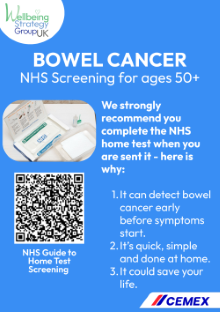
As we continue our Q1 Wellbeing Campaign, over the next few weeks we will be sharing information about Bowel Cancer, with statistics, symptom spotting and signposting support.
Bowel cancer, also known as colorectal cancer, is one of the most common cancers in the UK. Raising awareness of symptoms, screening and available support can help save lives through earlier diagnosis and treatment. If you notice ongoing changes in your bowel habits, blood in your poo, or unexplained weight loss or fatigue, don’t ignore it. Speaking to a GP early could make a life-saving difference. Talking about bowel health might feel uncomfortable, but it’s an important conversation – and one that could save lives.
Bowel Cancer in the UK: Key Facts (source: cancerresearchuk.org)
- Bowel cancer is the fourth most common cancer overall.
- More than half (around 54%) of bowel cancer cases are considered preventable, linked to factors such as diet, physical activity, smoking and alcohol consumption.
- Bowel cancer is more common in people over 50, but rates among younger adults are rising, highlighting the importance of knowing the symptoms at any age.
- Survival rates are significantly higher when bowel cancer is diagnosed early, with over 90% survival at stage one.
Screening Saves Lives
In the UK, bowel cancer screening is offered by the NHS to people aged 50 to 74 (age ranges vary slightly by nation). Screening uses a home test kit (FIT) to detect hidden blood in stool and can identify cancer before symptoms appear. If you receive a FIT, please get yourself tested!
When your FIT drops through the letterbox, it’s important to take a few minutes to complete it. The test is quick, simple and done at home, and it could help detect bowel cancer before symptoms appear. The FIT test looks for tiny traces of blood in your poo that you wouldn’t be able to see yourself. Most people who complete the test do not need further tests, but if something needs checking, it means action can be taken sooner rather than later.
It might feel easy to put it aside, but completing your FIT test as soon as you receive it is one of the simplest things you can do for your health. If you’re invited to take part, please do — it really could save your life.
Common Symptoms to Look Out For
Bowel cancer symptoms can be subtle and are often similar to other conditions. However, it’s important to speak to a GP if symptoms persist for three weeks or more.
- A change in bowel habits, such as diarrhoea or constipation that is unusual for you
- Blood in your poo or bleeding from the back passage
- Feeling like you still need to go to the toilet even after going
- Persistent tummy pain, bloating or a lump in the abdomen
- Unexplained weight loss
- Extreme tiredness or shortness of breath, which may be caused by anaemia
Having these symptoms does not necessarily mean you have cancer, but getting checked early can make treatment more effective.
Support, Information and Help
If you are worried about symptoms, have received a diagnosis, or are supporting someone else, help is available:
- Bowel Cancer UK – the UK’s leading bowel cancer charity, offering expert information, an Ask the Nurse service, online forums and peer support
https://www.bowelcanceruk.org.uk - NHS – trusted information on symptoms, screening and how to access care
https://www.nhs.uk/conditions/bowel-cancer - Macmillan Cancer Support – emotional, practical and financial support, including a free helpline
0808 808 00 00
macmillan.org.uk - Cancer Research UK – evidence-based information and a nurse helpline
0808 800 4040
cancerresearchuk.org
You can also find some further information in these downloadable documents on our UK News Website:
- Bowel Cancer guide for maintaining good bowel health
- Bowel Cancer symptoms poster
- Bowel Cancer fact card
Please share posters
We have produced a set of three posters with QR codes to further support – please share these on your wellbeing and workplace notice boards. A4 Notice Board Posters – Bowel Cancer