
Most of us experience anxiety from time to time, it is a completely normal human response. However, anxiety becomes more challenging when those feelings are frequent, overwhelming, or start affecting our daily lives, relationships or work.
What Is Anxiety?
Anxiety is our body’s natural response to perceived threat or danger. It’s part of our built-in survival system, often known as the “fight, flight or freeze” response. When the brain senses something it believes may be a threat, it releases stress hormones that prepare us to react quickly. While this response can be helpful in genuinely risky situations, modern anxiety is often triggered by pressures, uncertainty or worries rather than physical danger. This can leave us feeling on high alert even when we are safe.
Common Signs of Anxiety
Anxiety affects people differently, but common symptoms can include:
Physical signs: Racing heart; muscle tension; headaches; sweating; feeling restless or on edge; difficulty sleeping; upset stomach.
Emotional and mental signs: Excessive worry; feeling overwhelmed; difficulty concentrating; irritability; fear that something will go wrong; feeling unable to switch off.
Common Triggers
Anxiety can be triggered by many different factors, including work pressures and deadlines; financial concerns; relationship difficulties; health worries; major life changes; lack of sleep; uncertainty or change; too much information and constant digital connection. Often anxiety develops from a combination of factors rather than one single cause.
In safety-critical environments, unmanaged anxiety can also affect focus and decision-making, making it even more important that we look after our mental wellbeing.
Simple Ways to Reduce Anxiety
While anxiety can’t always be eliminated, there are practical steps that can help reduce its impact.
- Focus on What You Can Control: Anxiety often thrives on uncertainty. Ask yourself: “What is within my control right now?” Breaking larger problems into smaller actions can make situations feel more manageable.
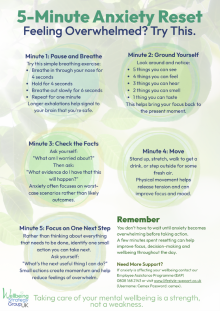
- Take a Breathing Pause: When anxiety rises, breathing often becomes quicker and shallower. Try this simple technique:
- Breathe in slowly through your nose for 4 seconds.
- Hold for 4 seconds.
- Breathe out slowly for 6 seconds.
- Repeat a few times.
This can help signal to the brain that you are safe.
- Reduce the Pressure to Be Perfect: Perfectionism often fuels anxiety. Aim for progress rather than perfection and remember that “good enough” is often enough.
- Move Your Body: Physical activity helps reduce stress hormones and improve mood. This doesn’t have to mean intense exercise. A short walk, stretching, gardening or any form of movement can help.
- Prioritise Sleep: Lack of sleep can significantly increase feelings of anxiety. Creating a consistent bedtime routine and reducing screen time before bed can make a difference.
- Talk to Someone: One of the most effective ways to manage anxiety is to talk about it. Speaking with a trusted colleague, friend, family member or professional can help put worries into perspective and reduce feelings of isolation.
We have created this 5 minutes Anxiety Reset poster to share on workplace notice boards to support you in the workplace. You can find the poster on the UK News download page HERE
Support Available
If anxiety is affecting you, support is available and you don’t have to manage it alone.
- Access support through our Employee Assistance Programme (EAP) – call 0808 168 2143 or visit lifestyle-support.co.uk (Username: Cemex Password: cemex).
- Anxiety UK: Specialist support, resources and advice for people experiencing anxiety.
- NHS Anxiety Support: Practical self-help advice and tools for managing anxiety, stress and low mood.
- Mind: Information, guidance and support on anxiety and mental health.
- Samaritans: Available 24/7 if you’re struggling to cope or need someone to listen.
Remember
Anxiety is a normal human experience, not a sign of weakness. By recognising the signs early, supporting one another and seeking help when needed, we can create a healthier, safer and more supportive workplace for everyone. Taking care of your mental wellbeing is just as important as taking care of your physical health—and small steps taken today can make a big difference tomorrow.