
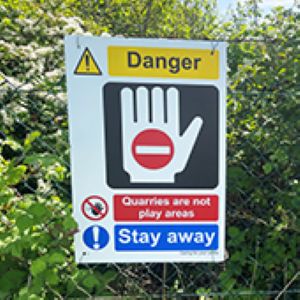
As we move into the spring and ahead of the warmer months, all Site Managers are reminded of the increased risk of trespass across our sites. Historically, improved weather, longer daylight hours and school holiday periods lead to higher footfall around site boundaries. This is particularly noticeable at known or informal access points and at sites located near residential or recreational areas.
Now is the time to proactively review and reinforce your site boundaries and security measures to help reduce the likelihood of unauthorised access and associated safety risks
Why this matters
Trespass presents a serious safety risk. Quarry sites and other operational areas contain significant hazards, including open water, excavations, access to height, mobile plant, confined spaces and stored materials. Open water can appear inviting during warm weather, while inactive or disused sites may give a false impression that they are safe to enter.
Key actions for Site Managers
As part of your routine site inspections and forward planning, please ensure the following actions are completed and kept under review:
- Secure site boundaries and known entry points
- Inspect all site perimeters, focusing on previous or potential access points.
- Ensure fencing, gates, bunds and barriers are secure and fit for purpose.
- Repair or replace damaged sections promptly.
- Update and Increase Signage
- Ensure no?trespass, danger, CCTV and site safety signage is in place.
- Position signs at regular intervals and at higher?risk locations such as gaps or informal access routes.
- Manage vegetation to deter access
- Where appropriate, encourage the growth or retention of natural vegetation along boundaries to help restrict access – it’s also GREEN!
- Vegetation can act as an effective visual and physical deterrent when managed correctly—without creating safety hazards.
- Avoid creating dense planting in areas where visibility for plant movement or safety monitoring is required.
- Carry out regular boundary inspections
- Continue your regular boundary and perimeter inspections, taking note of emerging weak points and document findings with photos where possible.
- Report issues promptly and ensure maintenance actions are tracked to completion.
- Review risk assessments and procedures
- Ensure risk assessments remain current and reflect seasonal increases in trespass risk.
- Confirm controls address key hazards such as open water, excavations, heights, mobile plant and confined spaces.
- Check inspection and maintenance regimes
- Confirm all inspection and maintenance schedules are up to date, including fencing, signage and security measures.
- Open water and lifesaving equipment
- Ensure life?saving equipment (e.g. throw lines, life buoys) is present, accessible and fit for purpose.
- Consider temporary or additional security where there are concerns about trespass.
- Security of fuel and equipment
- Review diesel and equipment security measures.
- Apply the same level of scrutiny to active, dormant and vacant sites.
Taking these steps now helps reduce the likelihood of trespass, protects the public from harm, safeguards our assets and reduces the risk of incidents before they occur. A proactive, well?maintained site sends a clear message that access is controlled and hazards are real.
Thank you for your continued commitment to keeping our sites safe, secure and well managed throughout the year.