
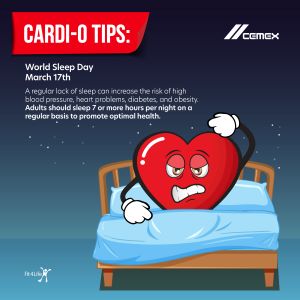
Today is World Sleep Day.
 Just like eating well and exercising, sleep is a behaviour that is foundational to one’s physical, mental, and social well-being. However, sleep is not yet commonly considered an essential behaviour for good health.
That’s why getting enough sleep is important for people of all ages to stay in good health. People often cut back on their sleep for work, for family demands, or even to watch a good show on television. But if not getting enough sleep is a regular part of your routine, you may be at an increased risk for obesity, type 2 diabetes, high blood pressure, heart disease, stroke, and poor mental health.
Even one night of short sleep can affect you the next day. Not only are you more likely to feel sleepy, but you’re also more likely to be in a bad mood, be less productive at work, and be involved in a motor vehicle crash.
Healthier Sleep in Adults:
- Establish a regular bedtime and waking time.
- If you are in the habit of taking siestas, do not exceed 45 minutes of daytime sleep.
- Avoid excessive alcohol ingestion four hours before bedtime, and do not smoke.
- Avoid caffeine six hours before bedtime. This includes coffee, tea and many sodas, as well as chocolate.
- Avoid heavy, spicy, or sugary foods four hours before bedtime. A light snack before bed is acceptable.
- Exercise regularly, but not right before bed.
- Use comfortable, inviting bedding.
- Find a comfortable sleep temperature setting and keep the room well ventilated.
- Block out all distracting noise and eliminate as much light as possible.
- Reserve your bed for sleep, avoiding its use for work.
You can find more sleep advice here: https://worldsleepday.org/usetoolkit/resources
You can find a poster in the download section of the UK News website: Healthier Sleep poster (1375 downloads ) with these Top 10 suggestions for healthier sleep.
Please share on your workplace notice boards.